


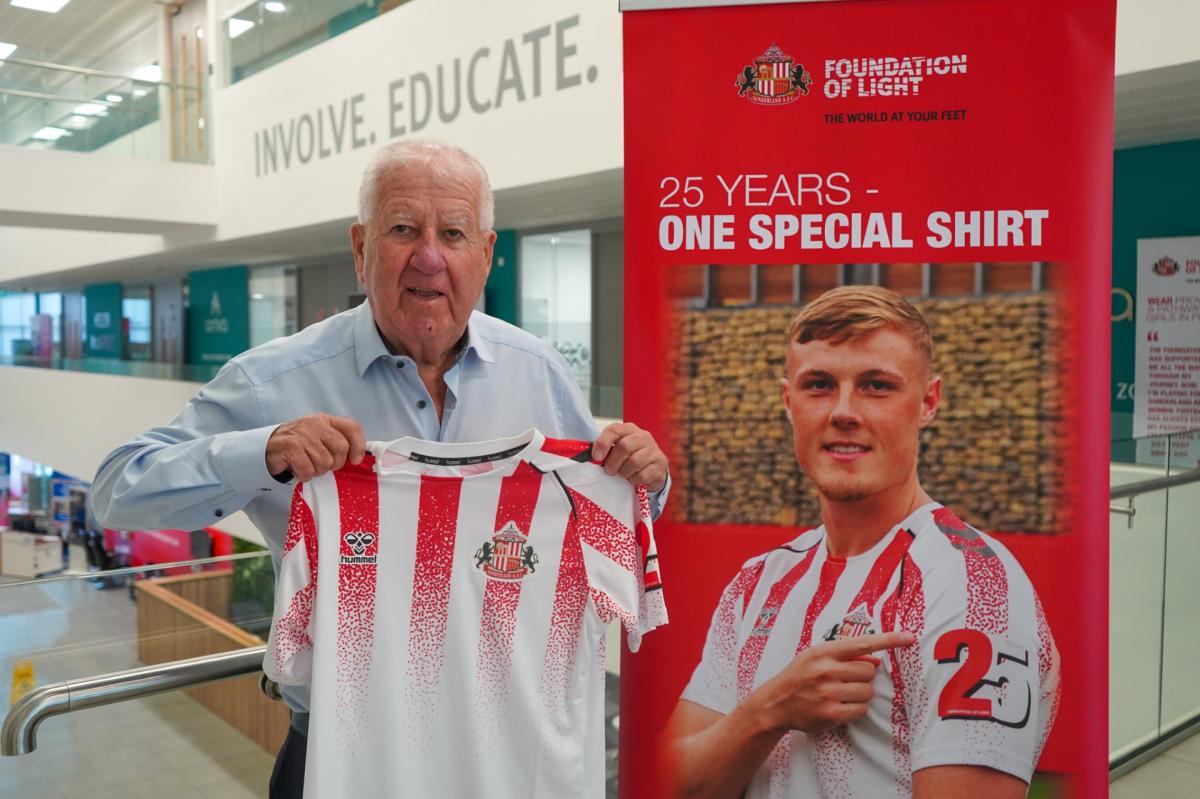
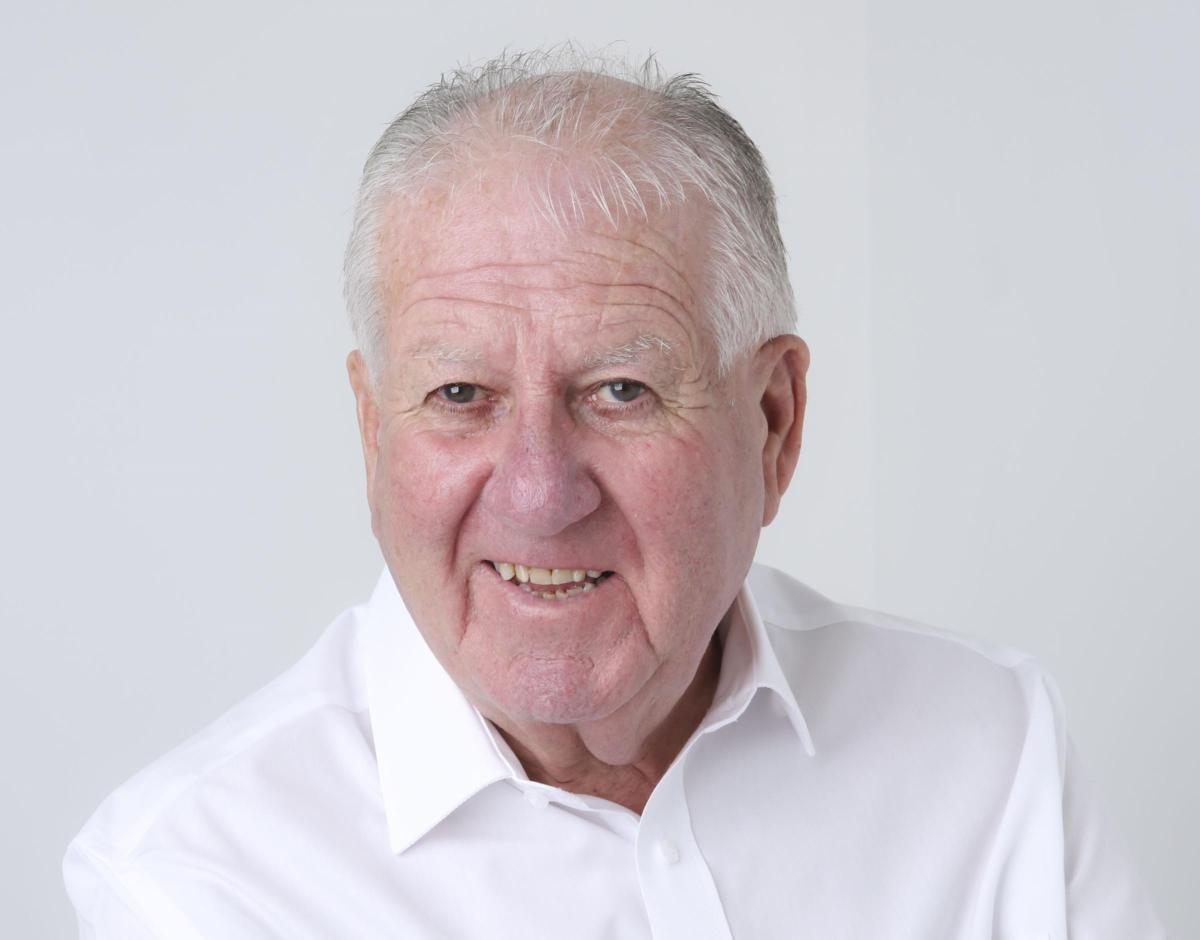

WHEN Sir Bob Murray reflects on the 25th anniversary of the Foundation of Light, the charitable arm of Sunderland AFC which he created in 2001 and continues to chair despite now being in his 80s, he admits to having mixed emotions.
There is immense and justified pride at the number of lives that have been touched and saved in the last two-and-a-half decades, not to mention the 25,000 people who are currently supported by the charity each year and the more than 7,000 people who visit the Beacon of Light, the Foundation’s flagship centre that stands alongside Sunderland’s home stadium, on a weekly basis.
But there is also intense dismay that after 25 years of trying to help and support some of the North-East’s most impoverished residents, the Foundation finds its services and support network more needed and in demand than ever. Governments of every colour have come and gone, but the neglect that is apparent within Murray’s home region remains the same. Indeed, if anything, things have got worse.
“The work we do here, it’s huge,” said Murray, sitting in one of the meeting rooms at the Beacon while staff and volunteers deliver a multitude of classes and workshops around him. “It’s absolutely huge. And the impact of it, I could take you all into a room just over there and you'd cry.
“The work we do is – well - it's shocking, really. It changes people's lives, and it's so badly needed. You’ve got people who can’t afford to feed themselves, people who can’t afford to warm themselves. People who have become outcast from society.
“There’s nowhere else for them to go. It would break your heart to see the work, the depth of work that we do for people who have just been outcast from life. It changes so many people. I really think it’s quite a unique charity.”
The Foundation grew from Sunderland’s original ‘Football in the Community’ programme that was pioneered in the 1980s, at a time when it was still quite rare for football clubs to have self-funded community initiatives.
Murray, who was Sunderland’s chairman for three decades before handing over the reins to Niall Quinn in 2006, always wanted his club to be about more than what happened on the pitch.
So, when he was contemplating his future towards the end of his chairmanship, he made the astute decision to take the Foundation out of the club’s hands and establish it as a standalone charity, supported by the football club but, crucially, separate to it.
That meant that as the club plummeted down the divisions, passing through the hands of owners whose intentions were at best opaque, the Foundation was able to survive and flourish, albeit with some rocky moments along the way.
“It was a little bit of foresight and a little bit of self-preservation, really,” said Murray, about his decision to separate charity and club in the early 2000s. “I very much wanted this to continue after my time. And I wanted it to be meaningful and big, things like that.
“Niall was different class, you know. He got it fully. But sadly, he sold to Ellis Short, and that was a minefield for us because we lost a lot of our income, not just through relegation, but through his actions. It was a really testing time.

“I think if Lesley (Spuhler, the charity’s chief executive) said something good about me, she'd say I protected the Foundation at times when it needed to be looked after. You shouldn't have to do that, but you know, he [Short] just didn't get it at all.
“Then, it moved on to the gentleman who we just won’t talk about [Stewart Donald and Charlie Methven]. And then, obviously, now it's a different world for us.
“We’ve got owners who are fantastic, so supportive. And now we’ve also got the stature of the Premier League, the finances of the Premier League and everything else that goes with it. It’s all such exciting times.”
Tomorrow, the Foundation will stage its annual Gala Dinner, with Sunderland’s home game against Leeds United on October 25 having been designated as the ‘Foundation Matchday’, celebrating the charity’s 25th anniversary.
While Kyril Louis-Dreyfus and Juan Sartori have been keen to offer support, as a standalone charity, the Foundation still needs to raise around £5m-a-year to fund the myriad programmes they run across their four pillars of education, sport, community and wellbeing. Even with Murray’s energy and drive, and the power and prestige that Sunderland’s badge helps to convey, that remains a challenge.
“It takes £100,000 a week to run us,” said Murray. “We have to fight for our money. Nobody comes knocking on our door with a bag. It’s very competitive getting public money, so we have to do what we can.
“I’m very fortunate – I’ve had a very fortunate life – but some people around here are not so fortunate. It’s been my privilege to try to support this for 25 years.”
And as he reflects on the continued need for the Foundation’s services, Murray cannot help but cast his mind back to an incident that was seared on his memory in the 1990s, just before the charity came into being.
“I can’t believe a lot of things I see now,” he said. “But then I think back to just how little has really changed. I always remember driving through Hexham with Stefan Schwarz, who was always one of my favourite people, this is going back years now.
“Anyway, there were people queuing on the street, and he said to me, ‘What are they doing?’ I said, ‘It’s a food bank’. He said, ‘A what? A food bank? Like what?’ So, I explained to him what it was. I said, ‘You go there to get free food to eat if you’re struggling or you can’t afford anything else’. He was so moved by it. He went out straightaway, spent a couple of grand and put some stuff in.
“At the time, you hoped it wouldn’t be long before things like that were no longer needed. Look around you now though. Nothing has changed.”


Share